Products
Can you remember a crunch?
A small tasting can help separate what someone remembers from what the package or flavour name suggests.
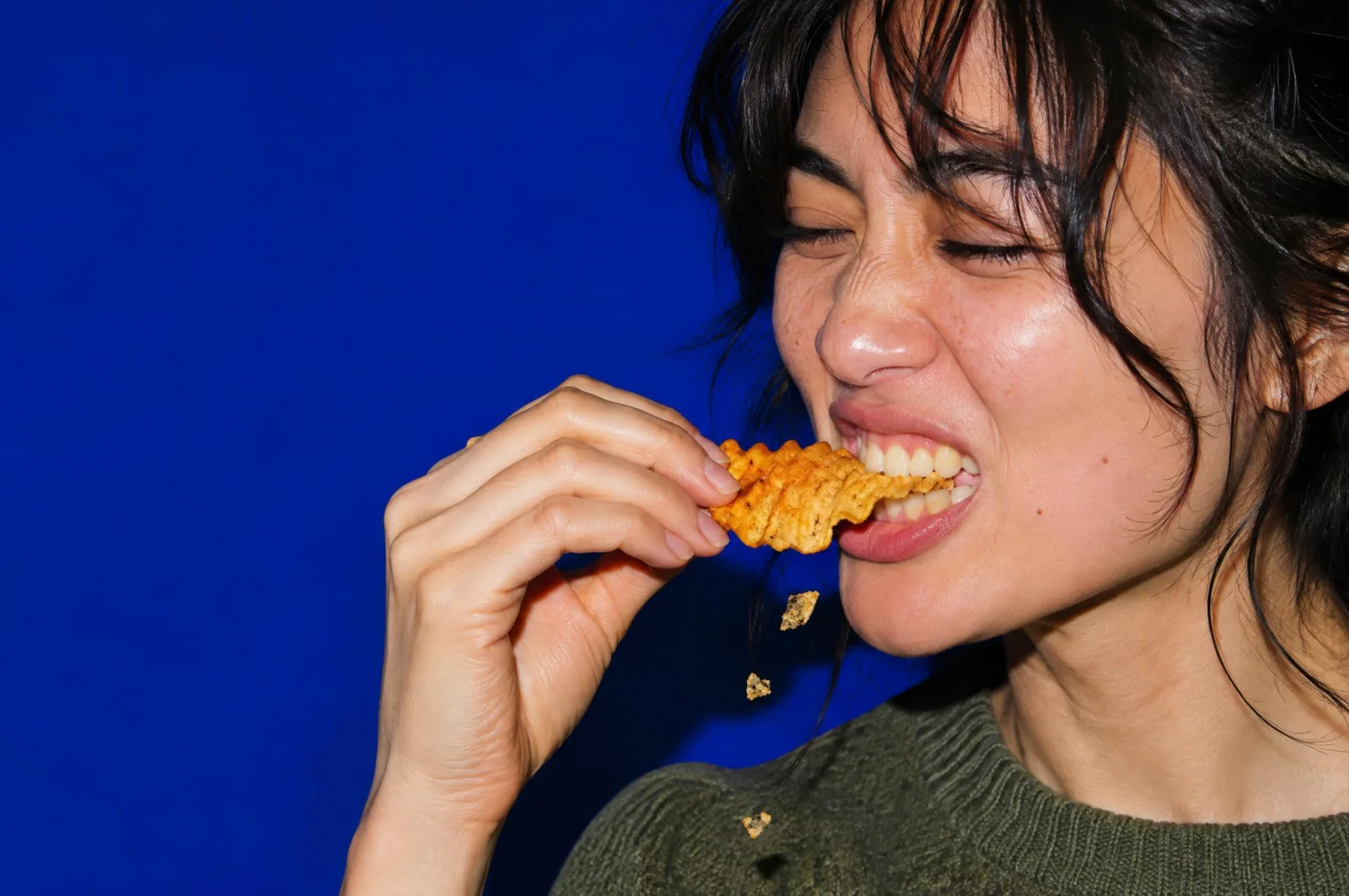
The detail that stuck
Someone remembers a snack they ate years ago. Asked to describe it, they name the seasoning. Then they mime the thin edge that snapped first and the way the broken pieces held a little more seasoning than the flat face. The second description is the one that gives a product developer something to try.
Memory is a starting point. People can be sure about the sound and vague about the shape, or remember a brand more clearly than the food. Writing down the sensory detail makes it possible to investigate without borrowing the original product’s identity.
Change one thing at a time
Try a comparison that changes either the shape, the texture, or the seasoning while keeping the other important conditions as similar as possible. Present samples without packaging and ask what people notice before mentioning the memory. Use the same prompt and give people a way to describe a mismatch.
A tasting can be too tidy. Texture and seasoning affect each other, so a test that separates them may miss the combination the person cares about. Once there’s a clue, test the combination in the way someone would actually eat it.
Use the memory to make a new choice
The result might be that the baked edge matters more than the original flavour. It might be that the memory was specific to one person. Either finding changes what you make next and how confidently you describe it.
An original snack can carry forward one quality someone loved. The useful work is to identify that quality precisely enough to build something new around it.