Research
What would make us stop building this?
A first experiment needs a result that could change what the team does next.
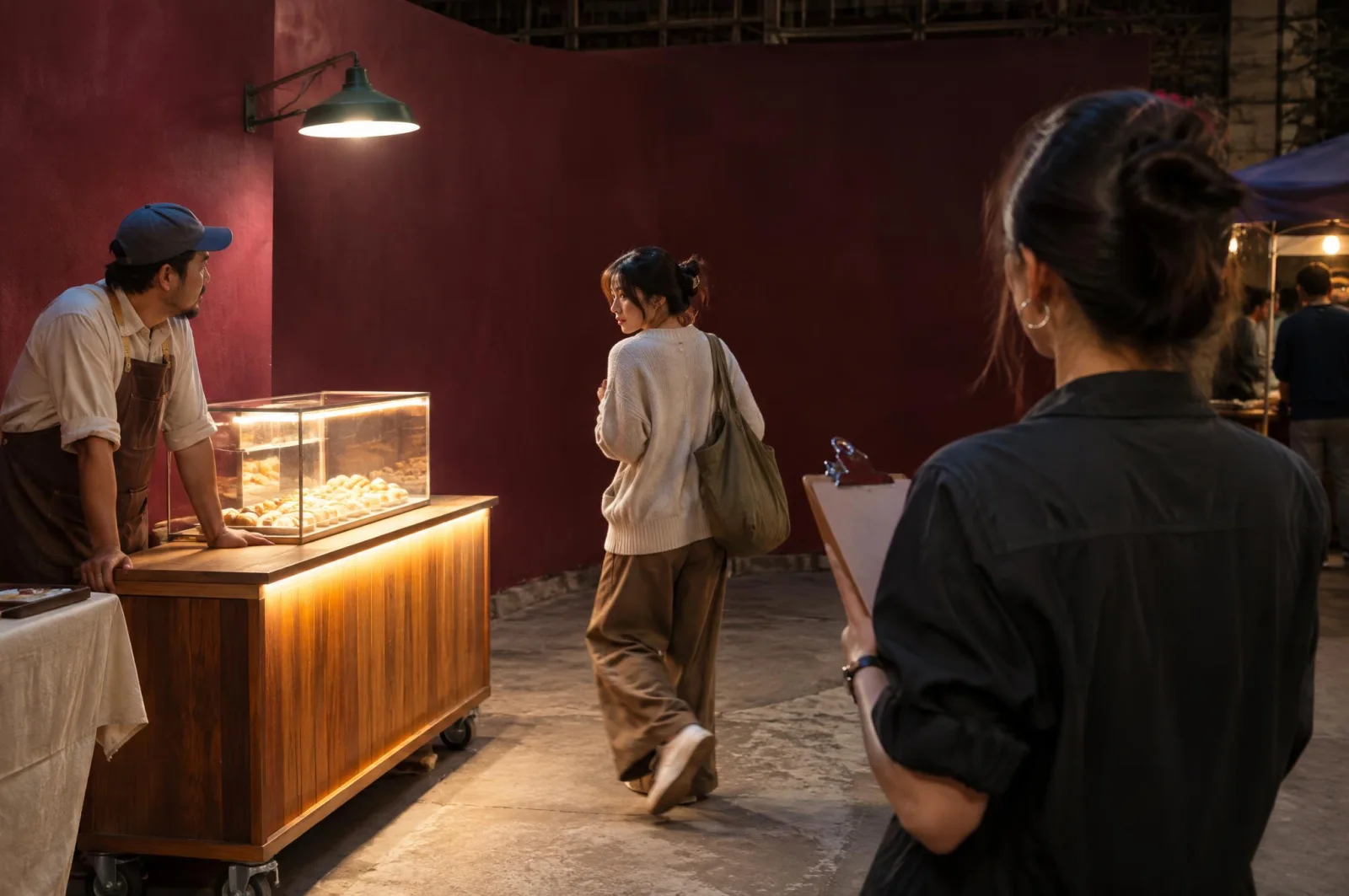
An idea everyone likes
Imagine an event organizer proposing a little app that tells people where to meet. The existing group chat is noisy, and everyone can picture a cleaner screen. It is tempting to ask whether people would use the app. It is more useful to see whether they can find and act on the meeting point under the conditions that made the chat frustrating.
Choose what someone has to do. Give people the same change of location and the same time pressure. Compare the app with the strongest cheap alternative, such as a pinned message. Include the work the organizer has to do after the meeting point changes.
Agree on the uncomfortable result early
Before building, say what would change the decision. Continue if enough people can find the current location without asking the organizer and the extra setup is manageable. Change the design if people find the location but miss that it was updated. Stop if the pinned message does the job with substantially less work.
Those are example decisions, not thresholds backed by a study. Set actual criteria for the setting and people involved. The exercise is worthwhile because it makes the team commit to taking seriously a result it would prefer not to see.
Ask why the result occurred
A failed trial can mean the task was poorly chosen or the prototype was unclear. If a participant can describe what confused them, a second test may be worth the effort. Record what changed and preserve the less flattering first result.
A good test leaves you with a move you can explain. Sometimes the outcome is a better app. Sometimes it is a better way to use the tool everyone already has.