







Engelbart OS
Engelbart OS investigates connected company work, responsibility and verified action. Projects B, F, S and H examine workflows in government tenders, freelance work, social channels and authorized challenges.
Explore Engelbart OS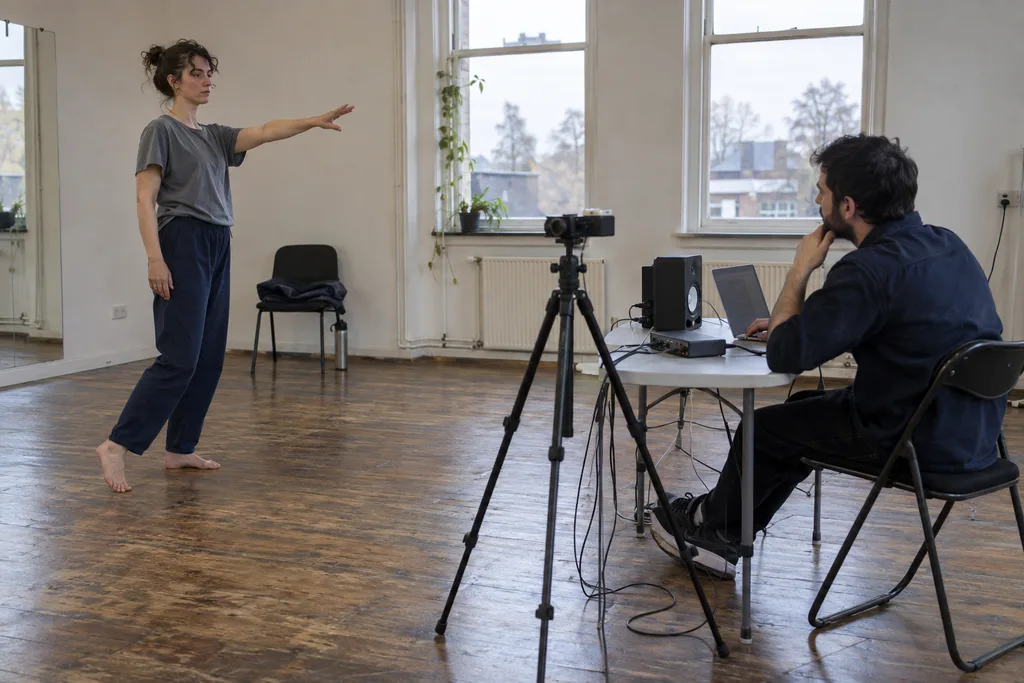


State the question and why answering it could change a decision.

Review what is known and identify the uncertainty that remains.
Choose an experiment or prototype that can examine the question.
Set the evidence, resources, and review point needed to assess it.

Compare what happened with the intended outcome.
Decide whether the project should continue, change, transfer, or pause.










An intelligent system may answer a question, complete a task, or use a tool. Useful participation also means understanding the situation, choosing an appropriate action, coordinating with other systems, and checking whether the result advanced the objective.
What should the system pursue, and what must it understand first?

Context. Identify the people, tools, responsibilities, and conditions that shape the situation.

Action. Carry work through to an outcome that people can examine.

Coordination. Trace how systems exchange instructions, knowledge, and results.

Presence and review. Help people understand the system, assess its result, and decide what should happen next.
These themes organize existing projects for communication. They do not imply shared technology or an established integration.
Engelbart OS investigates connected company work, responsibility and verified action. Projects B, F, S and H examine workflows in government tenders, freelance work, social channels and authorized challenges.
Explore Engelbart OSWorld OS investigates a Minecraft-based environment for company activity. Engelbart OS XR explores spatial work interfaces. Projects G and V investigate movement, music and visual expression; Project O explores modular homes as integrated systems.
Explore World OS
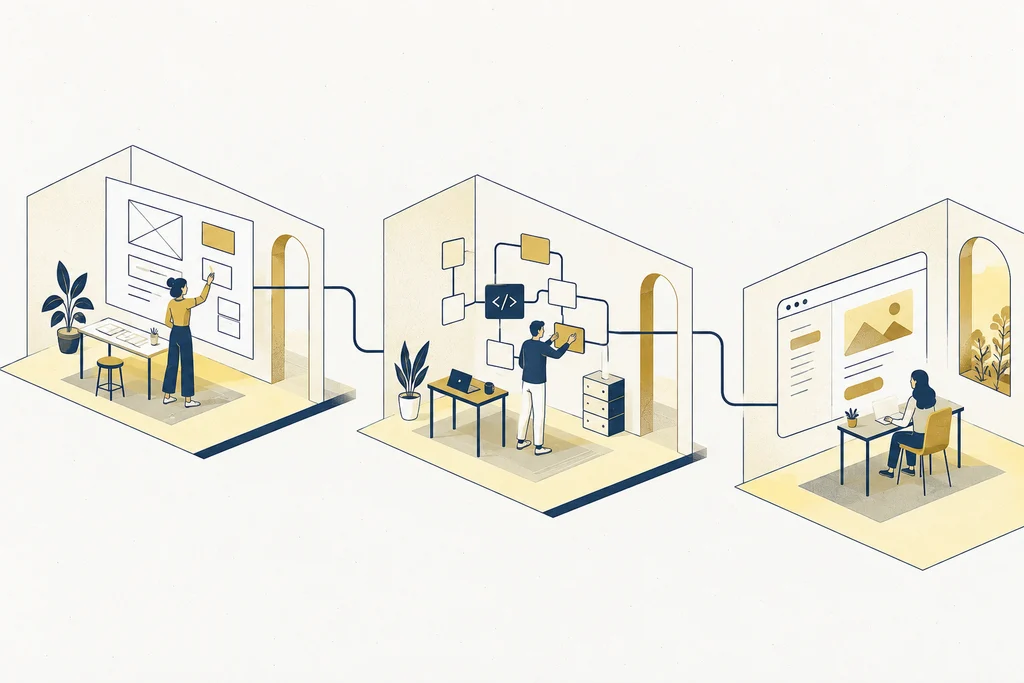
We turn ambitious questions into knowledge, working experiments and foundations for future businesses.
Engelbart OS investigates connected company work, responsibility and verified action. Projects B, F, S and H explore workflows in government tenders, freelance work, social channels and authorized challenges. Together, they ask what it takes for intelligent systems to participate in an operation from opportunity through accepted delivery.
Projects P and T investigate prediction and financial-market automation. Project A explores agents exchanging paid capabilities and accounting for delivered value. Together, they examine decision quality, changing conditions, coordination and the economics around automated activity.
World OS investigates a Minecraft-based environment for company activity. Engelbart OS XR explores spatial work interfaces. Projects G and V investigate movement, music and visual expression; Project O explores modular homes as integrated systems. Together, they examine how environments, bodies and interfaces change what people and systems can understand and do.
Research investigates questions and develops experiments. Labs develops promising opportunities into products and ventures. Slingshot organizes and delivers defined business services. The Studio considers a company’s purpose, offer, people and operating requirements.

Prepared context. How does context remain useful as responsibilities and circumstances change?

Enduring objectives. How do enduring objectives become appropriate, achievable next actions?

How do agents exchange instructions, knowledge and results with clear responsibility?

Modeled internal states. How do internal states influence attention, motivation and behavior? Persistent presence. How can a recognizable AI presence carry across software, spatial displays and robotics?
Three questions guide the work: what should a system pursue, how should it act, and how should people experience it?
Direction means choosing what a system should pursue and identifying the context it needs before it acts.
Action means carrying work through to an outcome: choose an appropriate next step, coordinate with other systems and make the result possible to examine.
Presence means helping people understand a system’s activity, assess its outcome and decide what should happen next.
Each experiment makes its question testable and its assumptions visible.
Define the evidence, resources and review point before an investigation begins. Decide what result could change.
A project may continue, change direction, transfer into development, remain as reusable knowledge or be parked. Record the method and implications, including when an experiment does not succeed.

The first year should make Goldstine Research understandable, selective, and demonstrably useful to the group.



State the question and why an answer could change a decision.

Review existing knowledge and name what remains uncertain.

Choose an experiment or prototype that can test the question.

Define the evidence needed to assess what happened.

Set the people, tools, resources, and review point required.

Name the next decision the result will inform.